

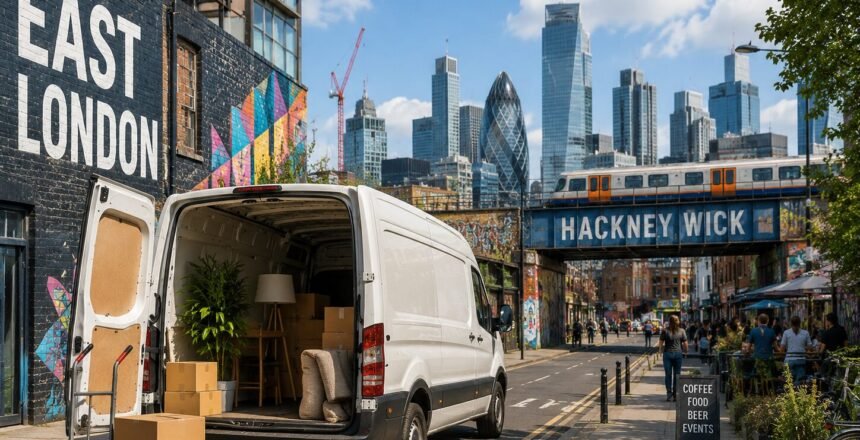
East London has changed more dramatically than almost anywhere else in London over the past two decades. The same borough that housed the 2012 Olympics is now home to gleaming residential towers, a world-class arts scene, and some of the best transport connections in the capital. And yet, move a few stops east on the Elizabeth line and you find genuinely affordable housing, tight-knit communities, and a pace of life that feels nothing like Zone 1.
If you are thinking of moving to East London, the challenge is knowing which part. The difference between Canary Wharf and Barking is not just a postcode, it is a completely different lifestyle, housing stock, commute, and cost of living. This guide covers every major neighbourhood in detail, followed by the practical van hire and moving tips that make East London moves different from the rest of the city.
Is East London Right For You?
East London is one of the few parts of London where you can still find genuine value if you know where to look. The areas closest to the City (Shoreditch, Bethnal Green, Hackney) have gentrified significantly and now command prices that rival South and West London. Move further east, Walthamstow, Forest Gate, Barking and the cost drops sharply while the Elizabeth line keeps you connected.
East London suits you if:
- You want character, community, and independent culture over polished corporate streets
- You are a young professional, creative, or student who wants Zone 2–3 access without Zone 2–3 prices
- You value transport links (Stratford is one of the best-connected stations in the UK)
- You are a family wanting more space per pound than West or South London can offer
East London may not suit you if:
- You need direct District or Piccadilly line access (coverage is patchy in places)
- You want the quiet residential feel of outer South or West London
- You are moving with very large furniture and need easy van access. Victorian East London is notorious for tight stairwells and narrow roads
East London Neighbourhood Guide – Area by Area

Hackney (London Fields, Hackney Central, Dalston, Stoke Newington)
The vibe: Hackney has been East London’s creative heartland for well over a decade and shows no sign of changing. London Fields is independent coffee shops, the lido in summer, and Victorian terraces converted into bright flats. Dalston is louder and more nightlife-focused still genuinely diverse and culturally alive. Stoke Newington is the calmer, more family-oriented end, with Church Street on a Saturday feeling closer to a market town than Zone 2 London.
Housing stock: Predominantly Victorian and Edwardian terraced houses split into flats. Newer purpose-built blocks are appearing around Hackney Central and the canal. Expect narrow hallways, steep staircases, and no lift in most properties worth knowing when planning your move.
Average rent (2026): 1-bed flat £1,600–£2,000/month. Rooms from £900/month.
Transport: London Overground (Hackney Central, Hackney Downs, London Fields). No tube station but excellent bus connections and cycling infrastructure.
Parking note: Hackney operates Controlled Parking Zones (CPZs) across almost the entire borough. You will need a parking suspension permit from Hackney Council for moving day apply at least 2 weeks in advance.
Best for: Young professionals, creatives, cyclists, independent business owners.
Shoreditch & Bethnal Green
The vibe: Shoreditch is where East London’s creative reputation was built and while it has become expensive, it remains a genuine centre for tech, media, and design. Bethnal Green sits just behind it with the same energy at a slightly lower price point. Brick Lane runs between them, still one of the best streets in London for food, vintage shops, and Sunday morning wandering.
Housing stock: Converted Victorian warehouses (loft-style flats), purpose-built blocks, and some older council estates. Warehouse conversions look spectacular but can be genuinely difficult to move into original industrial features, unusual room layouts, and service lifts that vary wildly between buildings.
Average rent (2026): 1-bed flat £1,700–£2,200/month in Shoreditch. Bethnal Green from £1,450–£1,800/month.
Transport: Overground (Shoreditch High Street), Elizabeth Line and Central Line (Bethnal Green).
Parking note: Tower Hamlets borough. CPZs throughout, and street parking is extremely limited around Brick Lane and Shoreditch High Street. A parking suspension permit is essential apply to Tower Hamlets Council.
Best for: Tech workers, creatives, nightlife enthusiasts, City workers who want character over convenience.
Stratford & Westfield
The vibe: Stratford has been transformed since the 2012 Olympics more than almost anywhere else in London. The Queen Elizabeth Olympic Park is now genuinely world-class green space. Westfield gives it retail credentials no other East London area can match. The residential towers going up around the park are pulling in a new generation of professionals who are priced out of inner zones but want modern-build quality.
Housing stock: Primarily modern high-rise apartment buildings, many with concierge, gym, and roof terrace. Moving into a Stratford tower block requires coordinating with building management most have specific goods lift booking systems and restrict moving hours (often 8am–5pm weekdays only).
Average rent (2026): 1-bed flat £1,500–£1,900/month in a newer build.
Transport: Elizabeth Line, Jubilee Line, DLR, National Rail. Stratford is one of the best-connected stations in the UK. Paddington in 7 minutes. Heathrow in 35.
Parking note: Newham borough. Residential parking schemes operate near the station. New development zones have managed parking always confirm van access with your building before booking a moving company.
Best for: Commuters, anyone wanting new-build quality, professionals who want excellent connectivity at Zone 2/3 prices.
Canary Wharf & Isle of Dogs
The vibe: Canary Wharf is unlike anywhere else in London a self-contained financial district built on former docklands, with its own shopping centre, parks, and river views. It is clean, well-maintained, and extremely well connected. The Isle of Dogs surrounding it is more residential and increasingly popular with professionals who want Canary Wharf proximity without Canary Wharf rents.
Housing stock: Almost entirely modern high-rise apartment buildings. Many are 20+ floors. Every building has its own goods lift policy most require a pre-booked removal slot, and some limit moves to specific hours. Contact your building management team at least 2 weeks before moving day, not the day before.
Average rent (2026): 1-bed flat £1,900–£2,500/month. River view apartments higher.
Transport: Jubilee Line, DLR, Elizabeth Line. Among the fastest connections to the City in London.
Parking note: Extremely limited on-street parking. Most buildings have no visitor bay. Moving into Canary Wharf almost always requires pre-coordination with building management for van access do not leave this until the last minute.
Best for: Finance and corporate professionals, those who value modern builds, river views, and world-class transport.
Bow & Mile End
The vibe: Bow and Mile End sit in the middle of East London between the buzz of Bethnal Green and the newness of Stratford. Mile End has a large student population (Queen Mary University of London is here), a lively high street, and the Mile End Park running along the canal. Bow is more residential, with a genuine mix of housing types and a quieter day-to-day feel.
Housing stock: A genuinely varied mix Victorian terraces, 1960s–80s council blocks, and some newer purpose-built flats. The older housing stock means staircase challenges are common. It is one of the few East London areas where you regularly find houses with gardens at relatively accessible prices.
Average rent (2026): 1-bed flat £1,400–£1,700/month. Rooms from £800/month.
Transport: Central Line (Mile End, Bow Road), DLR (Bow Church), numerous buses.
Best for: Students, young professionals, anyone wanting central East London positioning at a more accessible price.
Walthamstow
The vibe: Walthamstow has undergone one of the most significant character shifts of any East London borough in the past decade. The Village is genuinely desirable now independent restaurants, the William Morris Gallery, beautiful Victorian streets with mature trees. Walthamstow Market (Europe’s longest outdoor market) still runs the length of the high street, keeping the area genuinely diverse and community-rooted rather than purely gentrified.
Housing stock: Victorian terraced houses dominate, many now fully extended or converted. Popular with families who want more space and garden access than inner East London can offer at the same price.
Average rent (2026): 1-bed flat £1,300–£1,600/month. Victorian houses from £1,800+/month.
Transport: Victoria Line (Walthamstow Central) – Oxford Circus in under 20 minutes. Overground (St James Street, Walthamstow Queens Road).
Best for: Families, professionals who want space and a neighbourhood feel without sacrificing central London access.
Forest Gate & Manor Park
The vibe: One of East London’s most compelling up-and-coming areas. The Elizabeth Line has cut journey times to Liverpool Street to under 15 minutes, which has driven renewed interest in an area that was previously overlooked. Forest Gate in particular has seen a wave of independent cafés and creative businesses open alongside its established South Asian and Caribbean community. Property prices remain genuinely below comparable Zone 3 areas.
Housing stock: Victorian and Edwardian semi-detached and terraced houses, many in original condition. Excellent value for those looking to buy or rent a full house rather than a flat.
Average rent (2026): 1-bed flat from £1,100–£1,400/month. 2-bed houses from £1,400–£1,800/month.
Transport: Elizabeth Line (Forest Gate, Manor Park) – Paddington in under 25 minutes, Canary Wharf in 10.
Best for: First-time buyers, families, professionals looking for genuine space and value with strong future growth potential.
Barking & Dagenham
The vibe: The most affordable part of East London and one of the few remaining areas where working-class London culture feels genuinely intact. Barking town centre has seen real investment a new civic square, improved retail, and the growing Barking Riverside development, which will eventually be one of the largest new residential developments in London. Dagenham is quieter, more suburban, and further out.
Housing stock: Inter-war and post-war housing estates, some purpose-built flats, and the newer regeneration builds at Barking Riverside. You get the most space for your money in East London here.
Average rent (2026): 1-bed flat from £1,000–£1,300/month. 2-bed houses from £1,200–£1,500/month.
Transport: District Line and Elizabeth Line (Barking), C2C rail. Journey times to central London are longer factor this into your decision.
Best for: Those prioritizing space and cost, families, anyone who works locally or can work remotely.
Practical Van Hire Tips for Moving to East London
After 18+ years completing moves across East London, these are the things that actually make a difference:
Sort Your Parking Permit Before Anything Else
Hackney, Tower Hamlets, Newham and Waltham Forest all operate Controlled Parking Zones across most residential streets. Moving a van without a suspension permit almost always results in a fine or the van being unable to stop outside your property at all.
Apply to your relevant council at least 2 weeks before moving day:
- Hackney: Hackney Council parking portal
- Tower Hamlets (Shoreditch, Bethnal Green, Bow, Canary Wharf): Tower Hamlets Council
- Newham (Stratford, Forest Gate, Manor Park): Newham Council
- Waltham Forest (Walthamstow): Waltham Forest Council
- Barking & Dagenham: London Borough of Barking and Dagenham
Pre-Book the Goods Lift for High-Rise Buildings
If you are moving into Stratford, Canary Wharf, or any modern apartment complex with a concierge, you need to book the goods lift in advance. Most buildings allocate specific time slots sometimes just 2–3 hours and will not allow moves outside those windows. Contact your building management the moment you have a confirmed moving date.
Check the ULEZ and Congestion Charge Before Booking
The ULEZ covers all of Greater London including all East London postcodes make sure your van hire company is fully compliant. Our entire fleet is ULEZ compliant with no surcharge.
The Congestion Charge zone extends into the western edge of East London – E1 postcodes near the City boundary can fall within it. The charge is £18 per day and applies to the van. We always check your route and confirm any applicable charges before your move.
Brick Lane and Shoreditch Market Restrictions
Some streets around Brick Lane operate pedestrian or market access restrictions on weekend mornings. If you are moving in or out of this area on a Saturday or Sunday before midday, discuss the route and timing with your driver in advance to avoid access issues.
Victorian Properties – Know What You Are Getting Into
A significant proportion of East London’s housing stock is Victorian narrow doorways, steep staircases, no lifts, and the occasional unexpectedly tight corner at the top of a staircase. Measure your large furniture (sofas, wardrobes, bed frames) against the doorway and stairwell widths before moving day. It saves significant time and occasional heartbreak.
How to Hire a Man and Van for Your East London Move
For most East London moves a flat, a single room, or a full house removal in London . A man and van service for East London is the most practical and cost-effective option.
Choosing the right van size:
| Property Type | Recommended Van | Notes |
|---|---|---|
| Studio / single room | Small or medium Transit | Enough for most single-room moves |
| 1-bedroom flat | Large Transit or Luton | Add a second mover for high-rise or stairs |
| 2-bedroom flat or house | Luton van | 2–3 movers recommended |
| 3–4 bedroom house | Luton + extra movers | Discuss with us at quote stage |
How long does an East London move take?
Most within-borough moves (Hackney to Hackney, Stratford to Bow) take 2–4 hours. Cross-East-London moves (Walthamstow to Canary Wharf) typically run 3–5 hours. A 2-hour minimum applies to all bookings.
Need to move just one item a sofa, wardrobe, or washing machine? Our single item collection service covers all East London postcodes from £50.
Want to add packing? Our professional packing service can be added to any East London move booking. We bring all materials and pack every room.
East London Moving Costs – What to Budget
| Move Type | Van Size | Typical Duration | From |
|---|---|---|---|
| Studio / single room | Small van | 2 hrs (minimum) | £100 |
| 1-bedroom flat | Large van | 3–4 hrs | £195–£260 |
| 2-bedroom flat | Luton van | 4–5 hrs | £300–£375 |
| 3-bedroom house | Luton + 3 movers | 5–7 hrs | £375–£525 |
A 2-hour minimum applies to all bookings. ULEZ is included at no surcharge. The Congestion Charge (£18) applies if your route passes through the CC zone and will be confirmed before your move.
See our full man and van London prices for a complete breakdown.
East London Moving Checklist
- Apply for a parking suspension permit – at least 2 weeks before moving day, from your borough council
- Pre-book the goods lift if moving into a high-rise or managed building contact building management immediately once your date is confirmed
- Confirm ULEZ compliance with your van hire company covers all of Greater London
- Check your route for the Congestion Charge – particularly if moving near E1 or City border postcodes
- Measure doorways and stairwells – Victorian East London is notorious for tight access points
- Label every box by room – your movers will place them correctly without you directing each one
- Set aside a first-night box – kettle, charger, medication, a change of clothes keep it with you, not on the van
- Notify Royal Mail, DVLA, your bank and GP of your new address before moving day if possible
Frequently Asked Questions
How much does a man and van cost for an East London move?
Prices start from £50/hr with a 2-hour minimum (from £100 for a small van). A typical 1-bed flat move within East London costs between £150 and £260 depending on distance, floor level, and whether a second mover is needed. See the full man and van London prices.
Do I need a parking permit to move house in East London?
In most areas, yes. Hackney, Tower Hamlets, Newham, and Waltham Forest all operate Controlled Parking Zones across most residential streets. Apply to your borough council at least 2 weeks before your moving date without a suspension permit you risk a parking fine or being unable to load outside the property.
Is East London inside the ULEZ zone?
Yes. The Ultra Low Emission Zone covers all of Greater London, including all East London boroughs. Our entire man and van fleet is ULEZ compliant, there is no additional surcharge on your booking.
What is the cheapest area to live in East London?
Barking and Dagenham consistently offers the lowest rents in East London, with 1-bed flats from around £1,000/month. Forest Gate and Manor Park are close behind and offer better transport links thanks to the Elizabeth Line.
Do you cover all East London postcodes for van hire?
Yes. We cover every East London postcode – E1 through E18, IG1, IG11, and all surrounding areas with 24 hours a day, 7 days a week. Book online at a man with a van London or call 07702894895.