

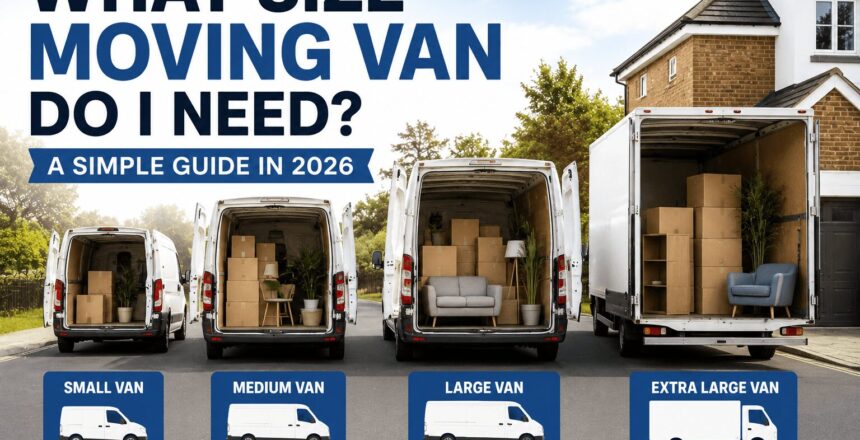
Picking the wrong van size is one of the most common moving day mistakes. Go too small, and you’re stuck doing a second trip, which eats up time and adds extra cost. Go too big, and you’re paying for space you never actually use.
The good news is that working out the right size isn’t complicated once you know what to look for. This guide breaks it down in plain terms, so you can book with confidence and avoid any surprises when the van turns up.
Why Van Size Matters More Than You Think
It’s easy to assume that bigger is always safer, but that’s not quite true. A larger van costs more per hour, and if it’s only half full, you’re not getting your money’s worth. On the other hand, a van that’s too small means everything doesn’t fit, and you end up needing a second run, which can double your travel time and push your costs up just as much.
Getting the size right the first time means everything goes in one trip, the cost stays predictable, and the whole day runs smoother.

Small Van – What It’s Good For
A small van is perfect if you’re moving a single room, a studio flat, or just a handful of larger items like a sofa, a bed frame, or a few boxes and a wardrobe.
Most small vans offer somewhere around 5 to 6 cubic metres of space. Think of it as enough room for the contents of one decent sized room, plus maybe ten to fifteen boxes. If your move fits in the back of a hatchback estate but you’d rather not make three trips, a small van is usually the right call.
Medium Van – What It’s Good For
A medium van is the workhorse for most one-bedroom flat moves. It typically offers around 8 to 10 cubic metres, which covers a bed, wardrobe, sofa, dining table and chairs, a few boxes of kitchen items, and the general contents of a one-bed flat without much trouble.
If you’re moving from a one-bedroom flat and don’t have anything unusually large or bulky, a medium van is often the sweet spot between cost and capacity.
Large Van (Luton Van) – What It’s Good For
A Luton van is the larger option, generally offering 15 to 18 cubic metres, often with a tail lift for heavier items. This size suits a two-bedroom flat, a small house, or an office move with desks, chairs, and filing cabinets.
If you’ve got a decent amount of furniture across multiple rooms, or you’re moving a small business with equipment and storage, this is usually the size you’ll want. It also gives a bit of breathing room if you’ve underestimated how much you actually own, which happens more often than people expect.
How to Work Out What You Actually Need
Count Your Big Items First
Before thinking about boxes, list out your large furniture. Bed, sofa, wardrobe, dining table, chairs, bookshelves, any appliances you’re taking with you. This gives you a rough sense of how much space you’re working with before boxes even come into the picture.
Think About Boxes Separately
Boxes take up surprisingly little room compared to furniture, but they add up. A one-bedroom flat often comes with 15 to 25 boxes once everything is packed. Factor this in after you’ve worked out your furniture, not before, since furniture usually takes up the bulk of the space.
When in Doubt, Go One Size Up
If you’re torn between two sizes, it’s almost always better to go slightly bigger. The cost difference between a medium and large van is usually smaller than the cost and hassle of a second trip. A bit of spare space also makes loading easier, since things don’t need to be packed in tightly.
Common Mistakes People Make With Van Sizes
One of the biggest mistakes is forgetting about garden items, storage units, sheds, or lofts. People often think about the rooms they live in day to day and forget the stuff that’s been tucked away for years.
Another common issue is underestimating how bulky soft furnishings are. A sofa or mattress takes up far more space than its weight suggests, and these items often eat into your van space faster than expected.
Finally, some people forget to account for awkward shapes. A wardrobe that doesn’t disassemble, a large mirror, or an oddly shaped piece of furniture can take up more room than a few boxes combined, simply because it can’t be stacked efficiently.
Why Get Help From a Local Man and Van Team
If you’re still not sure what size you need, it’s often easier to just describe your move to a local team and let them advise you. A Man and Van London service will have moved hundreds of flats and houses similar to yours, and can usually tell you the right van size within a minute or two of hearing what you’ve got.
This is especially useful if you’re moving in an area with parking restrictions or narrow streets, since the right van size also affects how easily the team can access your property. If you’re moving in North London, for example, our man and van North London team knows the local streets well and can help you pick a size that works for both your belongings and your specific location.
Frequently Asked Questions
What size van do I need for a one-bedroom flat?
A medium van is usually enough for most one-bedroom flats, covering around 8 to 10 cubic metres. If you have a lot of furniture or several large items, you might want to step up to a large van to avoid a second trip.
Can a small van fit a sofa?
Yes, a small van can usually fit a two or three seater sofa along with a handful of other items, such as a bed frame and several boxes. If you’re moving multiple large pieces of furniture though, a medium van gives you more breathing room.
What’s the difference between a medium van and a Luton van?
A medium van offers around 8 to 10 cubic metres and suits a one-bedroom flat. A Luton van is larger, typically 15 to 18 cubic metres, often with a tail lift, and suits two-bedroom flats, small houses, or office moves with more furniture and equipment.
How do I know if I need two trips?
If your furniture and boxes clearly exceed the size of the van you’ve booked, two trips become necessary. The best way to avoid this is to count your large items first, then add boxes, and choose a van size with a bit of spare room rather than cutting it close.
Is it cheaper to hire a bigger van or do two trips?
In most cases, one trip with a slightly bigger van works out cheaper and faster than two trips with a smaller one. Two trips mean double the travel time, and if you’re being charged hourly, that adds up quickly.
Final Thoughts
Choosing the right van size doesn’t need to be guesswork. Start with your big furniture, add your boxes, and if you’re unsure, go one size up rather than down. A little planning here saves you time, money, and the headache of a second trip.
If you’d rather skip the guesswork altogether, get in touch and we can help you figure out the right size for your move. You can also check our man and van prices page for an idea of cost, or book your move online when you’re ready to go.